All Regarding Welding Assessment: Secret Advantages for Your Tasks
Welding assessment plays an important role in the building and manufacturing industries. It guarantees that welded joints meet quality and safety requirements. By recognizing flaws early, jobs can avoid monetary losses and considerable delays. Complying with market guidelines not only protects the stability of the last item yet also builds trust fund among stakeholders. Understanding the subtleties of this process reveals fringe benefits that can influence project results considerably. What are these advantages?
Understanding the Welding Inspection Process
Although welding is a critical component in various sectors, the assessment procedure is vital to ensure quality and security. This procedure entails a collection of organized examinations designed to recognize any possible problems that might jeopardize the stability of bonded joints. Initially, inspectors review welding procedures and certifications to confirm conformity with industry requirements.
Following this, visual assessments are conducted to evaluate the general look and surface of welds. Non-destructive testing methods, such as radiographic or ultrasonic screening, might additionally be utilized to discover inner defects without damaging the material. Documents plays a vital role, as it provides a document of examinations and searchings for, confirming traceability and responsibility.
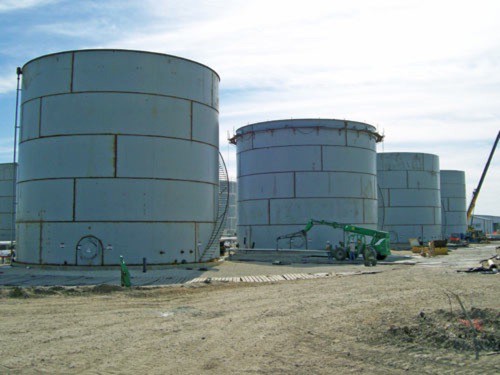
Inevitably, understanding the welding assessment process cultivates self-confidence in the high quality of the ended up item, lowers the threat of failures, and enhances overall task success in different applications, from building to production. API 650 Welding Inspection.
Typical Types of Welding Defects
Welding issues can significantly influence the integrity and performance of bonded frameworks, as they may bring about failures under anxiety or adverse problems. Typical sorts of welding defects include cracks, porosity, insufficient blend, and slag inclusion. Cracks can create due to thermal tensions or incorrect air conditioning, endangering the joint's toughness. Porosity refers to the visibility of gas bubbles caught in the weld, which can deteriorate the joint and decrease ductility. Incomplete combination happens when the weld steel does not appropriately bond with the base product, resulting in weak points. Slag inclusion occurs when non-metallic contaminations end up being entraped within the weld, causing a reduction in architectural honesty. Recognizing these problems early with evaluation is vital for maintaining high quality and ensuring safety in bonded structures. Comprehending these common defects enables enhanced welding strategies and boosted project outcomes.
Importance of Compliance With Sector Specifications
Conformity with sector requirements is vital for maintaining architectural integrity in welding tasks. Sticking to these requirements not just alleviates liability threats but also improves the general quality of the ended up job. This positioning promotes depend on amongst stakeholders and assurances that projects meet both safety and security and performance expectations.
Guaranteeing Architectural Stability
Assuring structural stability is critical in any kind of building or manufacturing task, as adherence to industry criteria offers as a structure for safety and security and integrity. Compliance with these criteria warranties that welding processes meet rigorous specifications, which is necessary for the durability of frameworks. Normal welding evaluations validate that methods and products straighten with developed guidelines, stopping potential failures that can compromise integrity. Furthermore, adhering to market requirements promotes uniformity in quality, which is critical for keeping public count on in construction methods. By prioritizing architectural integrity via persistent adherence to requirements, organizations can improve the general efficiency of their jobs, resulting in much safer settings and long term property life-spans. Eventually, this dedication mirrors a positive technique to top quality guarantee in welding methods.
Reducing Responsibility Dangers
Complying with sector standards substantially mitigates obligation dangers associated with welding jobs. Compliance with developed standards guarantees that welds satisfy safety and security and efficiency standards, reducing the chance of failings that might cause mishaps or litigation. This positive technique not just secures the workforce yet also safeguards the economic passions of the business. Low-grade techniques or poor evaluations can cause costly repairs, legal disagreements, and damages to reputation. By carrying out rigorous welding assessments, business show their commitment to quality and safety, inevitably minimizing direct exposure to possible claims. Additionally, adherence to regulations enhances trust fund among customers and stakeholders, as it indicates a commitment to preserving high standards throughout the project lifecycle. Lowering responsibility threats is vital for long-lasting organization sustainability.
Enhancing Task High Quality
Strenuous welding evaluations not only alleviate obligation threats however also play a crucial function in enhancing overall task high quality. By adhering to sector standards, these evaluations ensure that welds fulfill defined standards for safety and security, toughness, and toughness. Conformity with established standards aids recognize flaws early, reducing the possibility of costly rework or job hold-ups. Furthermore, regular quality assurance cultivates depend on amongst stakeholders, including customers and regulative bodies, which can cause duplicate organization and positive recommendations. Inevitably, a commitment to top quality welding practices not just improves the stability of the final product yet additionally maintains the reputation of the company included. Subsequently, comprehensive examinations work as a foundation for lasting and successful task results.
Benefits of Very Early Detection of Issues
Early detection of welding problems uses considerable benefits, especially relating to price financial savings on repair work. By recognizing issues before they rise, companies can improve the structural integrity of their jobs. This proactive approach not just reduces monetary expenditures however additionally promotes safety and security and reliability in welded frameworks.
Expense Savings on Repairs
Identifying welding issues promptly can bring about substantial price financial savings on repair work. Early identification of defects allows for targeted treatments, minimizing the extent of damages and protecting against pricey, comprehensive repair services later on. When issues are resolved throughout the first stages of a project, sources are utilized a lot more efficiently, lowering both labor and material expenses. In addition, timely examinations can prevent job hold-ups, which frequently incur additional expenses. By correcting issues early, companies can avoid the monetary burden related to rework, warranty insurance claims, and potential safety dangers. Inevitably, purchasing positive welding inspections cultivates an extra cost-efficient approach to project administration, guaranteeing that spending plans remain undamaged while preserving the top quality and visit our website reliability of the end product.
Boosted Architectural Integrity
Making certain the architectural stability of welded parts depends upon the timely recognition of potential concerns. Early discovery during the welding assessment procedure permits the immediate rectification of flaws such as splits, voids, or inappropriate blend. Addressing these concerns without delay not just boosts the stamina and resilience of the weld yet also mitigates the risk of disastrous failures throughout the life span of the framework. Routine evaluations add to an extra reputable evaluation of weld top quality, ensuring conformity with market standards. By focusing on welding evaluations, job supervisors can preserve a greater navigate to this site degree of security and efficiency, inevitably causing successful project results. Boosted structural integrity reflects the dedication to high quality and adherence to ideal practices in welding.
Cost-Effectiveness of Welding Inspections
While lots of firms might watch welding inspections as an additional expenditure, they commonly verify to be a cost-effective financial investment in the lengthy run. By recognizing issues early, these examinations can protect against pricey repair work or replacements that may occur from unnoticed problems. This proactive strategy not just conserves money yet additionally minimizes project delays, making sure that timelines are adhered to.
Additionally, high-grade welding evaluations add to boosted effectiveness, leading to fewer rework circumstances and enhanced performance. The reduction in product waste and labor costs connected with redoing malfunctioning welds includes in the financial benefits.
Investing in thorough assessments likewise improves the total high quality of the end product, which can cause increased customer contentment and repeat business. Eventually, the preliminary prices connected with welding evaluations are commonly surpassed by the long-lasting cost savings and advantages they give, making them a wise choice for any welding job.
Enhancing Safety And Security and Integrity in Welding Projects
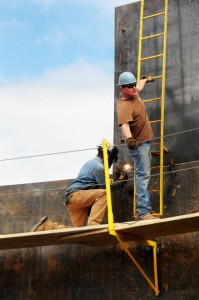
Welding inspections play an important role in enhancing safety and security and dependability within welding jobs, as they systematically identify possible dangers and weaknesses in welds. By utilizing certified inspectors, organizations can assure that welding procedures follow industry criteria and regulative demands. This positive method minimizes the threat of weld failings, which can result in accidents, pricey repair work, and project delays.
Furthermore, evaluations give crucial paperwork that proves conformity and high quality guarantee, promoting trust in between stakeholders. Normal assessments throughout various task phases enable the timely discovery of issues, making it possible for rehabilitative activities prior to they intensify. In addition, the insights got from evaluations add to continuous enhancement in welding practices, boosting overall job end results. Ultimately, robust welding examination protocols not only shield workers however also safeguard investments, guaranteeing that jobs are finished successfully and satisfy the highest possible safety and dependability requirements.
Often Asked Questions
What Credentials Should a Welding Examiner Have?
A welding inspector must have appropriate accreditations, such as Qualified Welding Assessor (CWI), in addition to considerable understanding of welding codes, processes, and materials. API 650 Welding Inspection. Experience in the field and solid analytical abilities are additionally essential for effective evaluations
How Typically Should Welding Inspections Be Carried Out?
Welding assessments must be carried out regularly, generally before, during, and after the welding procedure. The regularity might depend upon job specs, regulative demands, and the complexity of the welds to guarantee architectural honesty and safety and security.
Can Welding Inspections Be Done From Another Location?
Welding evaluations can undoubtedly be carried out remotely, making use of innovative innovations such as drones, video cameras, and ultrasonic testing devices - API 650 Welding Inspection. This technique permits reliable monitoring while reducing the need for physical existence at the site
What Tools Are Made Use Of in Welding Inspections?
Welding examinations use various devices, including ultrasonic testers, magnetic particle testers, aesthetic examination devices, radiographic devices, and calipers. Each tool serves a details purpose to ensure weld integrity, top quality, and conformity with industry criteria.
How Do I Select a Welding Evaluation Solution?

To choose a welding inspection solution, one should examine credentials, experience, and accreditations. Additionally, examining client testimonies and asking for comprehensive solution descriptions can assist assure the selected service meets certain project demands efficiently.
By focusing on welding evaluations, task managers can maintain a greater degree of safety and performance, inevitably leading to successful job results. Welding inspections play a necessary duty in enhancing security and dependability within welding tasks, as they systematically determine prospective threats and weak points in welds. A welding inspector ought to possess appropriate accreditations, such their website as Certified Welding Examiner (CWI), along with substantial knowledge of welding codes, processes, and products. Welding examinations ought to be carried out consistently, generally previously, during, and after the welding process. Welding assessments use different tools, including ultrasonic testers, magnetic particle testers, visual evaluation tools, radiographic equipment, and calipers.